in Charlotte
Look Younger With a Full Head of Hair
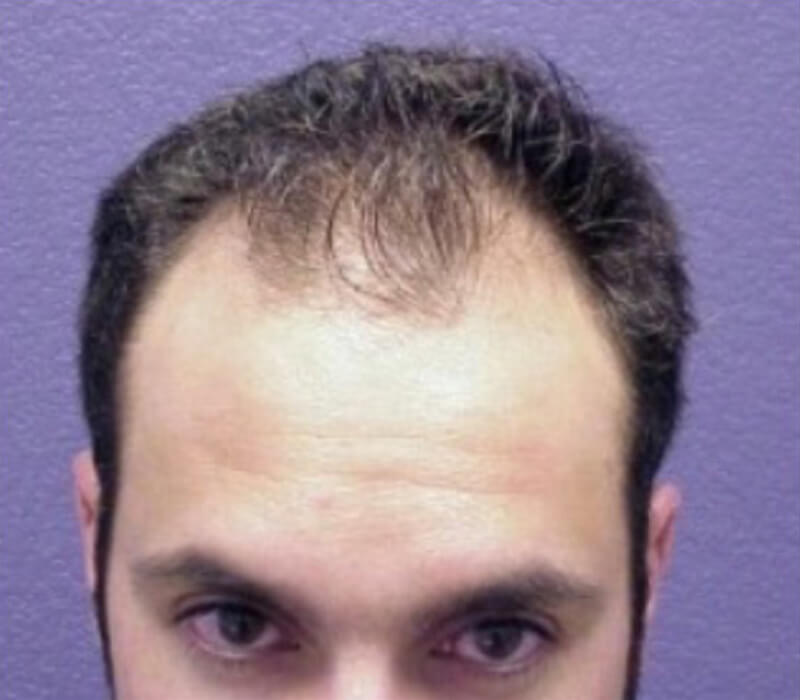
For those dealing with thinning hair and bald spots, it can be challenging to maintain their desired hairstyles or face social discomfort when concealing options like baseball caps become necessary. As a board-certified plastic surgeon and Charlotte hair transplant specialist, Dr. Victor S. Ferrari recognizes the profound impact that hair loss can have on his patients' lives. At Premier Plastic Surgery Center, we offer a solution that can help you regain control of your looks and your life. FDA-cleared NeoGraft hair transplant restores a lush, full head of hair in as little as one appointment.
Everyone notices some degree of hair falling out while showering or combing their hair. However, if you observe more hair falling out than usual or have to brush your hair a certain way to hide bald spots, it may be time to consider taking action.
NeoGraft is a minimally invasive hair transplant device that extracts individual donor hairs, usually from the back of the head, to populate bald or thinning areas on the crown, temples, and hairline. NeoGraft is a first-of-its-kind, FDA-cleared, automated hair transplant system on the market, increasing your odds of a more successful hair transplant than manual techniques.
True hair restoration requires a multi-layered biological approach. While a NeoGraft transplant effectively shifts active hair follicles to areas of recession, the procedure itself cannot halt the systemic, biochemical signals that cause progressive thinning in non-transplanted zones. To fortify your surgical results, our standard treatment framework incorporates Nutrafol into your long-term maintenance plan.
Nutrafol is a medical-grade, clinically backed nutraceutical that targets the root biological causes of thinning—specifically cortisol stress spikes, metabolic shifts, and localized DHT sensitivity. By combining the immediate physical change of a NeoGraft transplant with the internal cellular support of Nutrafol’s high-concentration botanicals, we optimize the scalp's microenvironment. This dual-action approach accelerates the transition of newly transplanted follicles into their active growth phase while actively protecting your existing, non-transplanted hair from future depletion.
The evolution of automated Follicular Unit Extraction (FUE) has altered the parameters of hair restoration. By utilizing a pneumatic, closed-loop harvesting system, NeoGraft protects the biological viability of individual hair grafts while eliminating the traditional surgical trade-offs associated with older hair transplant methodologies.
Both NeoGraft and ARTAS are minimally invasive hair transplant procedures that use FUE (follicular unit extraction) to harvest donor hair. FUE is a technique that removes individual hair follicles from the donor area, which is typically the back of the head. The follicles are then transplanted to the recipient area, which is usually the front of the head.
NeoGraft hair transplant is considered the gold standard for FUE hair transplants. It is a manual process that requires the surgeon to individually harvest each follicle. This makes it a more time-consuming procedure, but it also results in fewer transected follicles and a higher success rate.
ARTAS is a robotic hair transplant system that is FDA-approved. It uses machine learning to identify and harvest follicles from the donor area. The advantage of ARTAS is that it is a faster procedure than NeoGraft. However, it is also more expensive, and there is a risk of transecting follicles, which can lead to lower success rates.
| The NeoGraft System | The ARTAS System |
|---|---|
| Human Artistry & Adaptability | Automated Robotic Algorithm |
| Tactical Tactile Control: Operated directly by the surgeon's hand, allowing for instantaneous adjustments based on changes in scalp thickness, tissue resistance, and hair exit angles. | Rigid Grid Parameters: Relies on a mechanical arm and computer algorithms to select follicles based on pre-set mathematical averages, which can miss subtle anatomical nuances. |
| Textural Versatility: Highly effective across a broad range of hair types, including fine hair or multi-directional curls where rigid machinery is prone to damaging the root. | Limitation with Complex Textures: The automated robotic punch frequently struggles with tight curls or wave patterns, increasing the risk of transecting the follicle during extraction. |
| Minimal Footprint: Uses a nimble handpiece with smaller punch configurations, minimizing microscopic tissue disruption in delicate skin structures. | Substantial Mechanical Hardware: Requires the scalp to be locked into a heavy tension frame; uses larger physical punch diameters that can increase the visibility of healing marks. |
NeoGraft is best suited to individuals with an adequate amount of healthy hair for harvesting. Bald individuals and patients with advanced hair thinning on all areas of the scalp are not the best candidates for hair transplants in general. During your consultation, our experienced staff will examine the quality and density of your hair to determine if a NeoGraft hair transplant, or alternative treatments such as hair loss medication, are in your best interest.
The day of your hair restoration is an exercise in meticulous anatomical placement, performed under local tumescent anesthesia in our Charlotte suite. We isolate the donor zone at the lower back of the scalp, where the hair follicles are genetically programmed to resist the thinning effects of dihydrotestosterone (DHT). After introducing a specialized numbing fluid that expands the subcutaneous space for enhanced visibility, Dr. Ferrari uses the pneumatic NeoGraft handpiece to gently isolate and lift the follicular units. Patients typically report feeling a repetitive, light tapping sensation or a localized vacuum pressure against the scalp, rather than sharp discomfort.
Once harvested, the follicles are organized manually according to graft count—single hairs are isolated for the critical hairline border, while groupings of two or three are reserved for structural density further back. Charlotte NeoGraft Hair Transplant provider, Dr. Ferrari then hand-crafts the recipient incisions, determining the precise angle, depth, and exit direction of each graft to match your original growth pattern. The automated system then delivers each follicle into its new home, ensuring the delicate root bulb remains undisturbed during the final positioning.
How soon will I see results?
Most Charlotte NeoGraft hair transplant patients return to work and light activities in two to three days. Dr. Ferrari will help you create your recovery timeline based on a number of factors, including the size of the treatment area and the degree of hair loss.
This is an outpatient procedure and does not require a stay in a recovery room or hospital through the use of a local anesthetic. Compared to other methods, bleeding is minimal. Small scabs may form at both donor and recipient sites. These scabs will fall off on their own and should not be bothered.
Post-treatment discomfort is mild and usually subsides in 72 hours. The donor site should heal within a week or so. Most Matthews NeoGraft hair transplant patients report minor discomfort, pain, and swelling in and around the treatment area, which can be managed with cold compresses and over-the-counter pain relievers.
Transplanted hair follicles are generally settled into the scalp between 7 to 10 days following the procedure.
Regain confidence with a full head of hair
With NeoGraft hair transplant the newly grafted hair will remain in place and then start shedding after several weeks before new hair growth begins. Please know that this is a normal part of NeoGraft recovery.
New follicular development begins approximately three to four months post-treatment. Keep in mind that it could take up to a year to see the full, natural-looking hair transplant results of the procedure. Depending on hair thickness, additional treatments may be necessary.
Don't trust anyone but a board-certified plastic surgeon for your NeoGraft hair transplant. You owe it to yourself to see a highly qualified NeoGraft specialist such as Dr. Victor Ferrari.
As a board-certified, award-winning plastic surgeon for NeoGraft, Dr. Ferrari is passionate about helping his Charlotte NeoGraft hair transplant patients increase hair thickness and fullness with results that always look natural. To schedule a private consultation for NeoGraft, Charlotte plastic surgeon Dr. Ferrari is just a phone call away. Call (704) 288-5554 today.
Yes, in most cases, hair transplant with NeoGraft 2.0 is permanent.
Following a NeoGraft hair transplant Charlotte patients will not need someone to drive you home following the procedure. NeoGraft is an outpatient procedure, which means that you can go home the same day.
There is always a risk of side effects with any surgery, but the risks are minimal with NeoGraft. The most common side effects are temporary, including redness, swelling, tenderness, and itching at the hair transplant site.
NeoGraft hair transplant cost varies from person to person, depending on the amount of hair loss.
For the first six nights, you must sleep with your head elevated at a 45-degree angle using a travel pillow. This prevents your recipient grafts from rubbing against your bedding, which can dislodge the follicles before they have successfully anchored into the surrounding blood supply. By day seven, the grafts are biologically secure within the scalp tissue.
Yes. Because NeoGraft extracts individual follicular units rather than a thick strip of tissue, we can harvest the finest single-hair grafts from the nape of the neck to rebuild sparse eyebrows or fill patchy areas within a beard. The precision control allows us to mimic the flat angle required for natural facial hair growth.
Your First Choice For Exquisite, Natural-Looking Results